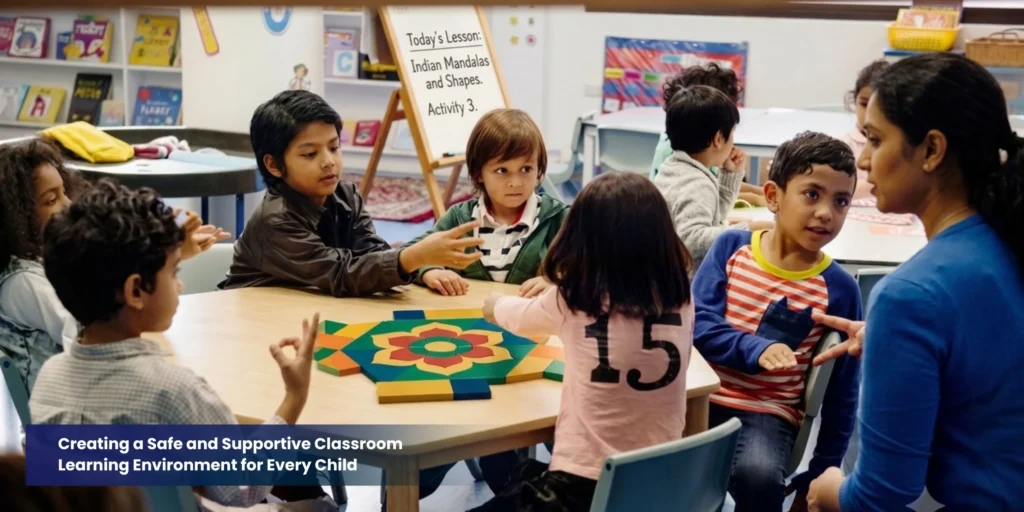
Children learn best when they feel safe. Not just physically, but emotionally too. A classroom learning environment built on trust and warmth allows a child to ask questions freely, make mistakes without fear, and grow at their own pace. This is something every school should prioritize, and it is exactly how Mauryan High approaches everyday teaching.
Why a Safe Classroom Learning Environment Matters
Children spend a significant part of their day at school. The classroom therefore needs to be more than a place for lessons.
When a child feels safe in class, something shifts. They start putting their hand up even when they’re not totally sure of the answer. They talk to the kid next to them instead of staring at their desk. Slowly, without anyone announcing it, they start becoming a more independent learner, one who’s comfortable figuring things out instead of waiting to be told.
Why Emotional Safety Matters as Much as Physical Safety
A child who is afraid of being judged seldom raises their hand even if they do know the answer. This behaviour changes when emotional safety is established. When mistakes are seen as part of the learning process rather than failures, children participate more openly, ask questions without hesitation, and share ideas without worrying about being laughed at.
How Teamwork for Students Strengthens the Classroom
A safer classroom atmosphere can be created when children learn to help each other rather than simply compete. Here, teamwork has a subtle yet significant impact. Through group projects, pair work, and collaborative problem-solving, children learn to listen, share credit, and help a struggling classmate, even if no one asks them to.
The feeling of belonging is important. A child who knows that he or she is part of a team is much less likely to feel isolated, even if the subject is difficult or if it is a tough week.
The Role of Teachers in Building Trust
No matter how many different wall colours are used or how the seating is arranged, teachers have the greatest influence in the classroom. If a teacher listens patiently, picks up on changes in behaviour early, and treats every child fairly, they set the atmosphere for the whole class.
At Mauryan High, teacher training does not stop at subject matter; teachers learn to recognize emotional cues, handle conflicts gently, and make room for different learning styles.
Encouraging Questions and Curiosity
A child should be comfortable in saying, “I do not understand.”
A simple sentence can form a significant element in the process of learning.
Mauryan High encourages students to ask questions, discuss different ideas, and explore various concepts through classroom activities and hands-on learning. Teachers can use these interactions to identify where students need extra explanation or support.
This approach can help children become more curious and independent learners.
Choosing a School That Feels Like a Safe Space
A classroom should never feel like a place a child dreads. It should feel like a place where they are heard, supported, and encouraged to try again after a mistake. This is the standard Mauryan High holds itself to every single day, in every classroom.
If you’re looking at schools in Vadodara and want your child somewhere they can grow academically without losing their confidence along the way, come see Mauryan High for yourself. Sit in on a class, talk to a teacher, and judge the classroom learning environment firsthand rather than taking our word for it.
FAQs
It’s due to a number of factors; a neat and well-organised environment helps, as does having a teacher who pays attention, doesn’t overlook a mistake, and ensures that all the children feel included rather than just those who speak first.
Beyond marking, teachers keep a close watch on the children and notice when a child may be unwell. The use of group work, giving gentle responses when a child gives the wrong answer, and having discussions in which everyone has a chance to take part all help children to speak up without fear of being laughed at.
Students develop a feeling of belonging from the start through working as a team. When they complete projects together, they learn to collaborate, be patient, and show empathy, which makes them feel supported by their peers rather than left on their own when facing difficulties.
Often, yes. A child who isn’t afraid of getting something wrong tends to ask more questions and stay more involved in class. Over time, that shows up in their academic performance too.
Parents should observe how teachers interact with students, how they handle mistakes, and whether classrooms encourage participation. A quick campus visit often reveals more than brochures about how genuinely supportive a school truly is.