
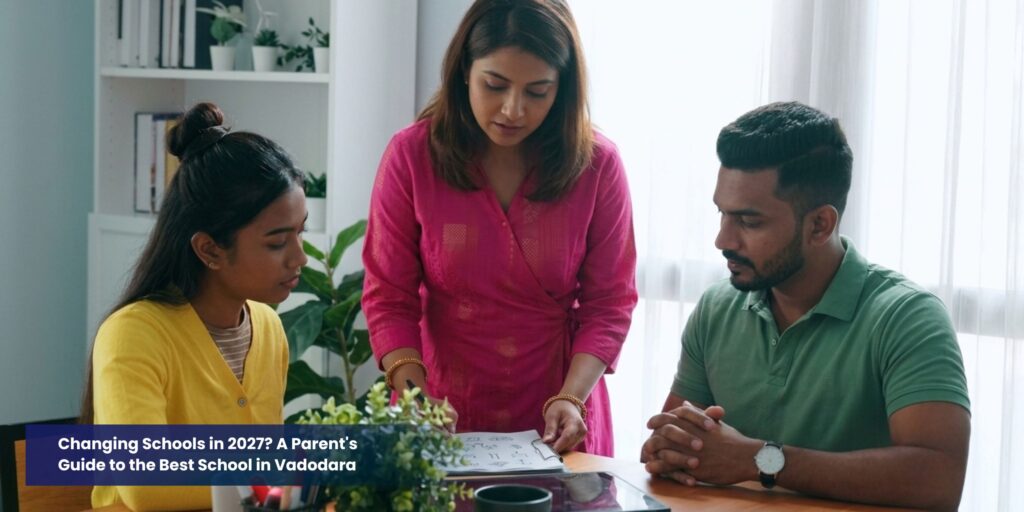
A parent-teacher meeting is more than a discussion about marks and homework. It gives parents and teachers a chance to understand how a child is progressing in the classroom, what they are doing well, and where they may need more support. Regular communication helps both sides work together instead of trying to understand the child’s needs on their own. Research has also linked meaningful teacher-family communication with better student engagement and academic outcomes.
Why Communication Between Teachers and Parents Matters
Children’s behaviour varies at home and at school. A teacher might find that a child is confident when taking part in activities but hesitant to speak in class. Parents could observe something similar at home or might see a totally different aspect of the child.
As soon as these observations are exchanged, a clearer picture starts to appear.
Good communication can help parents and teachers understand:
• Academic strengths and areas that need attention
• Classroom participation and behaviour
• Learning habits and consistency
• Social interaction with classmates
• Confidence levels
• Areas where the child needs encouragement
• Skills that can be developed further
That is the reason why the importance of parent-teacher meetings extends beyond checking examination results, since it provides a regular chance to talk about the child as a learner and as an individual.
How Teacher’s Feedback Helps Parents
Parents naturally want to know whether their child is doing well. Marks can answer part of that question, but they do not tell the complete story.
A teacher can provide useful observations from everyday classroom interactions.
For instance, a teacher might inform a parent that their child has a good understanding of mathematics but is hesitant to ask questions. With regard to another student, he or she may do well academically but will need some encouragement in order to take part in group activities.
Such feedback gives parents something practical to work on at home.
Instead of simply saying, “Study more,” parents can focus on a specific need. It could be reading regularly, practising communication, completing work independently, or becoming more comfortable with classroom participation.
Research has found that individualised communication from teachers can increase parental involvement and support student engagement.
Turning Feedback Into Action
Feedback becomes useful when it leads to simple and realistic steps.
Parents can ask teachers:
What is it that my child is doing well?
What area requires more attention?
• Is my child taking part in class?
• What can we do at home to support this skill?
• Has there been any alteration in behaviour or learning habits?
• Before the next review, what should our attention be on?
The teacher may suggest a reading routine, additional practice, more opportunities to speak, or simply greater encouragement.
Small changes can make a difference when they are followed consistently.
Building Confidence Through Positive Feedback
Communication shouldn’t focus only on problems.
Children also need to know the things they are doing well. If teachers pass on their genuine observations of a child’s strengths to the parents, then the families will be able to reinforce those positive aspects at home.
A child who is praised for finishing their work on their own may come to be more willing to take responsibility, and a student who is given encouragement for answering questions may eventually become more at ease about taking part in class.
Feedback can seem more constructive than discouraging when conversations cover strengths, progress, and what comes next. Both education research and advice on school engagement stress the importance of collaborative discussions that are centered on students’ progress and goals.
The Importance of Parent-Teacher Meetings in a Child’s Development
The importance of parent-teacher meetings becomes clearer when communication is treated as an ongoing process rather than a once-a-year formality.
A useful meeting should allow both parents and teachers to speak and listen.
Parents bring knowledge of the child’s home environment, habits, interests, and concerns. Teachers bring observations from the classroom. When both perspectives are considered, decisions about supporting the child can become more informed.
Strong home-school communication has also been associated with student engagement, academic adjustment, and positive family involvement.
How Parents Can Prepare for a Meeting
Parents do not need to do much preparation before a meeting. A little thought beforehand can help make the conversation more useful.
Before meeting the teacher, parents can:
• Talk to their child about how things are going at school.
• Look at recent homework, tests, or classwork.
• Think about any changes they have noticed at home.
• Write down a few questions they want to ask.
• Ask about both the child’s strengths and areas where they can improve.
• Listen to the teacher’s suggestions and avoid comparing their child with others.
The purpose of the meeting is not to decide whether a child is doing well or poorly. It is simply a chance for parents and teachers to understand the child better and discuss how they can support them.
Choosing a School That Values Parent Partnership
Before making a decision about admission, parents should think about the way the school keeps in contact with families.
Find out if the teachers are approachable, how progress is communicated, how concerns are dealt with, and whether parents are given some practical advice on how they can support their children’s learning at home.
At Mauryan High, regular communication between teachers and parents helps keep families informed about a child’s progress. Parents can understand how their child is doing in class, where they may need support, and what they can do at home.
When choosing a school, parents should look beyond academics and facilities. It is also important to see how the school communicates with families and keeps them involved in their child’s learning.
If you’re thinking of sending your child to a school, get in touch with Mauryan High to find out about its academic method, student support services, and how it communicates with parents, and visit the campus to see for yourself the learning environment.
FAQs
Most schools hold these meetings quarterly or at the end of each term. Some also offer additional sessions when a specific concern arises. Regular attendance, rather than one off visits, helps build a clearer picture of a child’s progress over time.
Parents can think about how their child is doing at home, including study habits, behaviour, or anything that may have changed recently. A few simple questions can help make the conversation clearer and more useful.
Marks do not always show how a child is feeling. A teacher may notice that a student is quieter than usual or avoids certain activities. Sharing these concerns early can help parents and teachers understand what the child may need.
It can help. When teachers point out what a child is doing well and also explain where they can improve, the child receives balanced support. Regular encouragement can gradually help children feel more comfortable and confident.
No. Marks are only one part of a child’s progress. Parents should also discuss classroom participation, learning habits, confidence, social interaction, strengths, and areas where the child may benefit from additional support.


